Advanced Diploma in Accounting – 7 Months

Advanced Diploma In Accounting

Gallery

Course Overview

The Advanced Diploma in Accounting is a 7-month professional program designed to provide structured training in modern accounting practices used in offices, firms, and corporate environments. The course includes office automation, advanced spreadsheet usage, computerized accounting, cloud-based accounting platforms, ERP finance systems, and practical income tax and GST filing procedures. The curriculum focuses on transaction processing, financial reporting, statutory compliance, and business accounting workflows followed in real organizations. Learners are trained on multiple accounting platforms to gain exposure to both traditional and digital accounting systems.

Course Modules –7 Months

  • Overview of Microsoft Office suite and its applications.
  • Understanding the user interface and common features.
  • Creating, formatting, and editing documents.
  • Working with text, paragraphs, and styles.
  • Inserting and formatting images, tables, and graphics.
  • Using templates and mail merge for document automation.
  • Creating, formatting, and managing worksheets and workbooks.
  • Working with formulas, functions, and calculations.
  • Data analysis techniques including sorting, filtering, and pivot tables.
  • Chart creation and visualization of data.
  • Creating and formatting slideshows and presentations.
  • Adding text, images, shapes, and multimedia elements.
  • Applying themes, layouts, and transitions for visual appeal.
  • Delivering presentations effectively.
  • Introduction to databases and database management systems.
  • Creating and designing databases, tables, and relationships.
  • Querying and filtering data using SQL and query design.
  • Creating forms, reports, and macros for database automation.
  • Integrating data and content between MS Office applications.
  • Collaborative editing and sharing of documents using OneDrive or SharePoint.
  • Co-authoring documents in real-time with colleagues.
  • Advanced formatting and automation techniques in Word, Excel, and PowerPoint.
  • Using advanced functions and analysis tools in Excel.
  • Database optimization and performance tuning in Access.
  • Hands-on practice with real-world scenarios and projects.
  • Developing skills through practical application of learned concepts.
  • Preparing for Microsoft Office Specialist (MOS) certification exams (if applicable).
  • Assessment of understanding through quizzes, assignments, and tests.
  • Accessing help resources, tutorials, and online communities for ongoing learning and support
  • Advanced Lookup Functions (INDEX-MATCH, XLOOKUP)
  • Database Functions (DSUM, DAVERAGE, DCOUNT, etc.)
  • Array Formulas and Dynamic Arrays
  • Financial Functions (IRR, NPV, FV, PMT)
  • Statistical Functions (COUNTIFS, SUMIFS, AVERAGEIFS)
  • Text Functions for Data Cleansing and Manipulation
  • Advanced PivotTable Techniques (Calculated Fields, Slicers, Timelines)
  • Power Pivot and Data Model Introduction
  • Power Query for Data Transformation and Cleansing
  • Data Analysis with Power BI Integration
  • Advanced Filtering and Sorting Techniques
  • Dynamic Named Ranges and Data Validation
  • Advanced Chart Types (Combo Charts, Radar Charts, Histograms)
  • Creating Dynamic Dashboards with Interactive Charts
  • Advanced Chart Formatting and Customization
  • Sparklines and Data Bars for Visual Insights
  • Using Maps and 3D Visualizations
  • Chart Automation with VBA
  • Introduction to VBA Programming Environment
  • VBA Syntax, Variables, and Data Types
  • Control Structures (Loops, Conditions)
  • Automating Tasks with VBA Macros
  • User Forms and Advanced Controls
  • Error Handling and Debugging Techniques
  • Goal Seek and Solver for Optimization
  • Scenario Manager for What-If Analysis
  • Monte Carlo Simulation with Excel
  • Advanced Statistical Analysis with Excel
  • Sensitivity Analysis and Scenario Analysis
  • Advanced Financial Modeling Techniques
  • Importing and Exporting Data from External Sources
  • Linking Excel with SQL Databases
  • Automating Data Refresh and Updates
  • Excel Add-Ins for Enhanced Functionality
  • Building Custom Functions with VBA
  • Integrating Excel with Other Office Applications
  • Collaborative Work with Excel Online and SharePoint
  • Tracking Changes and Managing Versions
  • Advanced Security Features (Encryption, Digital Signatures)
  • Protecting Workbooks, Worksheets, and Cells
  • Advanced Sharing and Access Control Techniques
  • Solving Real-world Business Problems with Excel
  • Capstone Projects: Developing Excel-Based Solutions
  • Advanced Financial Modeling Case Studies
  • Custom Solutions for Data Analysis and Reporting
  • Presenting Insights and Recommendations
  • Productivity Hacks for Excel Power Users
  • Advanced Excel Shortcuts and Techniques
  • Excel Best Practices for Efficiency and Accuracy
  • Troubleshooting and Problem-solving Strategies
  • Customizing Excel Environment for Maximum Productivity
  • Comprehensive Review of Course Material
  • Final Exam or Project Presentation
  • Certification of Advanced Excel Mastery
  • What is Accounting
  • Objectives of Accounting
  • Types of Accounts
  • Fundamental Accounting Equation
  • Double Entry System
  • Common Financial Statements
  • Overview of Tally Prime
  • Navigating the Tally Prime Interface
  • Understanding Key Functionalities and Features
  • Advanced Accounting Setup: Configuring Ledgers, Groups, and Cost Centers
  • Advanced Inventory setup: Stock Groups, Categories, and Items: Advanced Setup and Configurations
  • Managing Foreign Exchange Transactions: Currency Management and Forex Rates
  • Vouchers in Detail: Recording complex transactions using Payment, Receipt, Journal, Contra, and more
  • Bill of Materials (BoM): Creation and Management of Complex Bills of Materials
  • Multiple Stock Locations: Managing Multiple Godowns/Stores in Tally Prime
  • Stock Transfers and Adjustments: Handling Stock In Transit, Stock Adjustments, and Stock Valuation Reports
  • Inventory Valuation: FIFO, LIFO, and Average Cost Method
  • Financial Statements: Profit & Loss, Balance Sheet, and Cash Flow
  • Ratio Analysis: Calculating and Interpreting Financial Ratios
  • Budgets and Controls: Creating and Monitoring Budgets
  • Audit and Reconciliation:
  • Bank Reconciliation
  • Cash Flow and Bank Audit
  • Reconciliation of GST Returns
  • Employee Setup and Payroll Configurations
  • Salary Structures: Designing Complex Salary Structures and Pay Components
  • Statutory Compliances: PF, ESI, and Professional Tax Management
  • Generate Payroll Reports: Salary Slips, Pay Register, and Form 16
  • Leave Management: Tracking and Managing Employee Leave
  • Taxation Handling:
  • GST Computation and Returns
  • Tally GST Reports (GSTR-1, GSTR-3B, GSTR-9)
  • TDS and TCS Management
  • GST and TDS Reconciliation
  • Advanced GST Configuration: Tax Categories, HSN/SAC Codes, and Reverse Charge Mechanism
  • GST Auditing and Filing: Generating GST Audit Reports
  • GST on E-Commerce Transactions: Handling GST for E-Commerce Sellers and Buyers
  • TDS & TCS Advanced Configurations: Handling Different TDS/TCS Rates, Reporting, and Filing
  • Customizing Tax Reports and Returns
  • Customizing Reports: Creating and Modifying Reports (Financial, Inventory, etc.)
  • Tally Prime Dashboard: Setting up and Analyzing Custom Dashboards
  • Data Exporting and Importing: Exporting Reports to Excel, PDF, and XML formats
  • Multi-Company Reporting: Consolidating Financial Data Across Multiple Companies
  • Advanced Financial Reports: Cash Flow, Receivables/Payables, and Trial Balance
  • Data Backup and Restoration: Techniques for Backup, Restoring, and Data Integrity
  • Managing Multiple Users and Roles: Configuring User Permissions and Rights
  • Import and Export Data: Bulk Importing/Exporting Data using Tally
  • Creating Custom Invoices and Vouchers: Designing Templates for Vouchers and Invoices
  • Cost Centers and Cost Categories: Advanced Management for Cost Control
  • Consolidation of Multiple Companies: Inter-Company Transactions and Consolidated Reports
  • Handling Complex Transactions: Advanced Transactions and Entry Configuration
  • Overview of Zoho Books and its features
  • Importance of Zoho Books for businesses
  • Setting up a Zoho Books account and initial configurations
  • Understanding the Zoho Books dashboard
  • Customizing company details and financial settings
  • Configuring fiscal year, currency, and tax settings
  • Setting up and managing user roles and permissions
  • Integrating Zoho Books with third-party applications
  • Understanding accounts and the chart of accounts
  • Creating and managing bank accounts in Zoho Books
  • Setting up payment gateways and online payments
  • Managing transactions and reconciling bank accounts
  • Creating and managing invoices
  • Customizing invoice templates
  • Creating, sending, and converting estimates to invoices
  • Tracking unpaid invoices and reminders
  • Adding and categorizing business expenses
  • Managing recurring expenses
  • Importing and categorizing bank and credit card transactions
  • Expense reports and tracking
  • Understanding GST settings in Zoho Books
  • Creating and applying GST tax rates
  • Generating GST returns and reports
  • Filing GST compliance documents
  • Setting up inventory and adding items
  • Managing item stock levels, purchases, and sales
  • Creating purchase orders and bills
  • Generating inventory reports
  • Understanding key financial reports: Profit & Loss, Balance Sheet, and Cash Flow
  • Customizing and generating financial reports
  • Analyzing business performance through reports
  • Exporting reports to various formats
  • Setting up automation rules for recurring transactions
  • Creating and managing workflows for payments and invoices
  • Automated payment reminders and notifications
  • Customizing email templates and notification settings
  • Income Tax Basics

  • PAN & Compliance

  • ITR Filing (Individual & Business)

  • GST Registration

  • GSTR Filing

  • Input Tax Credit (ITC)

  • Live Practical Tax Filing

  • Real Client Case Studies

  • Overview of SAP ERP and SAP FICO
  • Importance and role of SAP FICO in business
  • Understanding the organizational structure in SAP
  • Navigation in SAP FICO
  • Enterprise Structure
  • Global Parameters Configuration
  • Chart of Accounts
  • Fiscal Year Variant
  • Posting Period Variant
  • Controlling Area
  • Number Ranges for Controlling Documents
  • Cost Element Accounting
  • Cost Center Accounting
  • Internal Orders
  • Profit Center Accounting
  • Integration with Materials Management (MM)
  • Integration with Sales and Distribution (SD)
  • Integration with Production Planning (PP)
  • Integration with Human Capital Management (HCM)
  •  
  • Financial Statements
  • Balance Sheet
  • Profit and Loss Statement
  • Cash Flow Statement
  • Financial Analysis using SAP Reports
  • Custom Report Creation
  • New GL Accounting
  • Parallel Accounting
  • Special Purpose Ledger
  • Document Splitting
  • Intercompany Transactions
  • Tax Configuration
  • Bank Accounting
  • Overview of SAP Project Lifecycle
  • Blueprinting
  • Realization
  • Final Preparation
  • Go-Live and Support
  • Hands-on practice on SAP IDES system
  • Real-world scenarios and problem-solving
  • Case studies from different industries
  • Overview of SAP Certification Exam for FICO
  • Sample Questions and Practice Tests
  • Tips for Exam Preparation
  • Overview of QuickBooks and its features
  • Installation and Setup of QuickBooks software
  • Understanding the QuickBooks interface and navigation
  • Setting up a company profile in QuickBooks
  • Understanding the chart of accounts
  • Recording and managing transactions
  • Setting up and managing customer, supplier, and employee details
  • Creating and managing invoices, estimates, and sales receipts
  • Recording and categorizing business expenses
  • Connecting QuickBooks to bank accounts
  • Understanding and performing bank reconciliation
  • Matching transactions between QuickBooks and bank statements
  • Handling credit card accounts and transactions
  • Setting up payroll in QuickBooks
  • Managing employee details, pay rates, and deductions
  • Processing payroll and generating paychecks
  • Filing taxes and year-end tax forms (W-2, W-3)
  • Payroll reporting
  • Understanding GST and tax rates
  • Creating and applying tax rates to transactions
  • Generating tax reports
  • Filing GST returns and staying compliant with regulations
  • etting up and managing inventory items
  • Tracking inventory levels, sales, and purchases
  • Adjusting inventory and managing stock reports
  • Handling sales tax and product-based transactions
  • Creating and customizing financial reports (Profit & Loss, Balance Sheet, Cash Flow)
  • Analyzing business performance with financial statements
  • Generating and reviewing accounts payable and receivable reports
  • Creating budgets and forecasting
  • Setting up recurring transactions
  • Automating tasks and workflows
  • Customizing invoices and templates
  • Managing multiple users and roles in QuickBooks
  • Generating advanced reports and insights

Who Can Join This Course?

This course is suitable for:

Why Choose JBK Academy Ameerpet Hyderabad?

JBK Academy is a leading institute for Accounting Training in Ameerpet Hyderabad, join the course and connect with the industry.

Our Hiring Partners

Enquiry form – Jbk Academy

Loading… ISO Certification We Are Providing ISO Certification For Our Students. 15000+ Students We bring the right people together to challenge established thinking Accredited &

Read More »

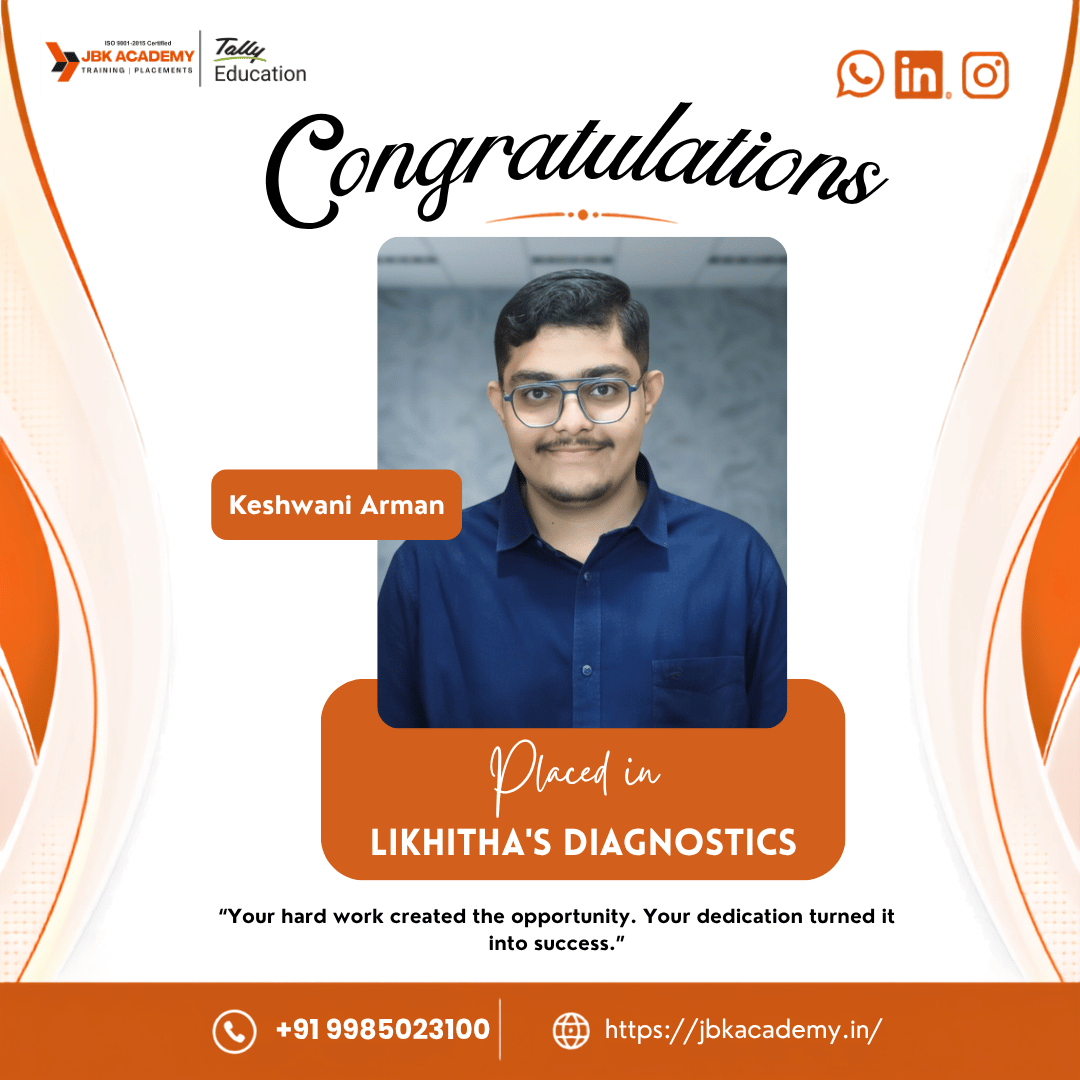
Our Placed Students

Frequently Asked Questions

No, beginners from any background can join.

Yes, it is designed for direct job placement.

Yes, full placement assistance is provided.

Yes, you will receive course completion certificates.

Our Happy Students